
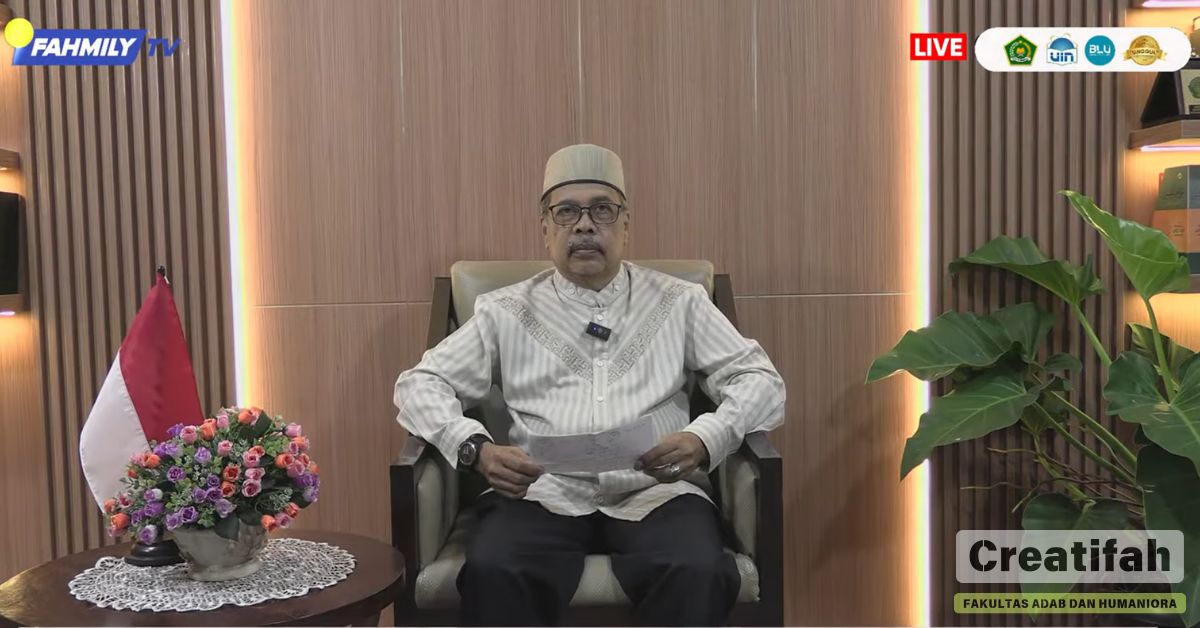
Maximize the Qurbah, Prof. Amirul Hadi Invites People to Dive into the Spiritual Meaning of Tarawih Prayers
South Tangerang, FAH News Online – Tarawih prayers are not just a routine of physical worship at night during the month of Ramadan. More than that, tarawih is a golden momentum for a servant to build a qurbah or deep spiritual closeness to Allah SWT. This was conveyed by Prof. Drs. H. Amirul Hadi, MA, Ph.D., in the Mutiara Ramadhan program (volume 2) which was broadcast by the Faculty of Adab and Humanities (FAH) UIN Syarif Hidayatullah Jakarta on Wednesday (25/02/26).
In his explanation, Prof. Amirul emphasized that tarawih is an inseparable part of qiyamul lail which only exists in the holy month. This worship must be carried out with full awareness (consciousness), not just physical movements. Through tarawih, Muslims are invited to pray, complain and communicate directly with the Creator.
"Tarawih is our opportunity to get closer or make qurbah. "We talk to God, we complain, and are fully aware of our situation before God," said Prof. Amirul in the video.
Erasing Sins and Pursuing Lailatul Qadar
One of the great virtues of tarawih prayer is as a means of eradicating sins. Quoting the hadith of the Prophet Muhammad SAW, Prof. Amirul explained that whoever prays on the night of the month of Ramadan with faith and hopes for Allah's approval, his previous sins will be forgiven.
Entering the final phase of Ramadan, he also reminded the importance of consistency in worship to achieve the virtues of Lailatul Qadar. He described how Rasulullah SAW "buckled his waist" or increased the intensity of his worship in the last ten nights.
"Lailatul Qadar is a big bonus that is better than a thousand months. Although we may physically start to feel weak at the end of Ramadan, therein lies the test. "We have to maximize our energy to pick up this glorious night," he explained.
The philosophy of 'Tarawih' as a Rest of the Soul
Etymologically, Prof. Amirul explained that the word 'Tarawih' comes from Arabic which means rest or calm. This contains the message that tarawih prayers should be performed with tuma'ninah, not in a hurry, and provide space for the soul to enjoy every reading and movement.
"Tarawih means rest. So you can't rush. "We stop for a moment, dhikr, so that we can enjoy worship as enjoyably as possible and soak into our hearts," he added.
Character Training for the Next 11 Months
In line with the thoughts of Imam Al-Ghazali, Prof. Amirul emphasized that fasting and tarawih must reach the inner level, not just the physical level. Ramadan is considered a period of "body and soul development" which aims to form a strong spiritual character.
The results of this one-month training at the Ramadan madrasa are expected to have an impact on a person's social behavior and consistency of worship during the next 11 months. By combining spiritual aspects and social piety, a Muslim is expected to be able to maintain the level of piety he has achieved.
Author: Rahmat Mubaroq/Kasih Nur/Deny Saputra