
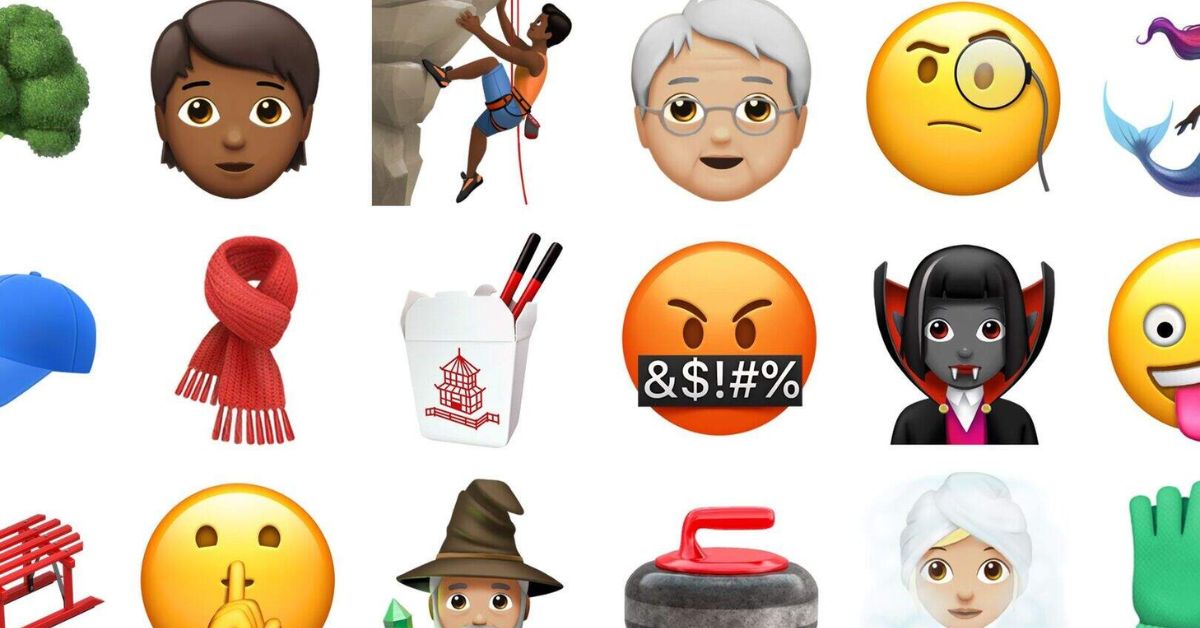
How Emojis Shape the Way We Communicate and Understand Identity
By: Andika Pratama
Digital communication in recent years has made it easier for us to convey all kinds of things in an elegant, simple, and concise manner. With just one click and a few taps, a complex series of ideas and abstract concepts can be conveyed through a single chat bubble, without the need to coordinate facial expressions and gestures as we do in the real world. Data show that Indonesia has a very large number of internet users, and a significant proportion of them spend their time on social media platforms such as WhatsApp, Facebook, and Instagram for social interaction and work. This phenomenon has given rise to a new form of communication that no longer relies entirely on verbal text, but can also combine text with visual language, which we now know through the use of emojis.
The word emoji originates from Japanese, combining e, meaning “picture,” and moji, meaning “character,” and can therefore literally be understood as a “picture character.” The popularity of emojis has grown rapidly because these symbols are capable of bridging the gap left by written text, which often fails to convey tone of voice or facial expressions. The development of emojis began with the use of simple emoticons in the 1980s, which were composed of punctuation marks arranged to form facial expressions. Over time, however, and with advances in visual communication technology, emoticons evolved into the more colorful and diverse emojis that we encounter on modern devices today.
A language cannot remain alive without being used by its speakers. This is consistent with Saussure’s concept of parole, or the actual practice of language use. When a user selects a particular emoji from hundreds of available options to respond to a message, they are engaging in an act of parole based on their psychological state and the context of the conversation at that particular moment. Choosing a red heart emoji rather than a blue one, or a broadly smiling face rather than a subtle smile, is a manifestation of an individual’s freedom to express their feelings in a specific way. Thus, emojis become a bridge between rigid social conventions and the highly personal and dynamic need for self-expression.
If we examine more closely whether emojis can be considered a complete language, the evidence suggests that they do not possess a rigid grammatical structure like spoken or written languages generally do. Emojis tend to follow simple linear patterns, and their order often depends on the interpretation intended by the sender. Although emojis do not have complex grammatical rules, they are frequently used as substitutes for punctuation marks within sentences. In many social media conversations, emojis are placed at the end of a sentence as a closing element that functions similarly to a period or an exclamation mark, reinforcing the sender’s intended meaning.
The absence of standardized grammar makes emojis highly dependent on the context of the accompanying sentence in order to be understood correctly. When an emoji is used without supporting text, the potential for ambiguity or misunderstanding becomes considerably greater because a single image may have multiple interpretations. For example, a smiling-face icon may, from one perspective, be interpreted as a sign of genuine happiness. From another perspective, particularly one influenced by a particular sentiment or conversational situation, it may instead appear to convey sarcasm. Therefore, both uses require an underlying context and cotext—the text that precedes or accompanies the emoji. Researchers have consequently found that combining verbal text with emojis is an effective way to convey messages accurately and minimize the risk of misinterpretation.
The combination of these two elements is particularly effective because verbal text provides informational clarity, while emojis provide emotional context and emphasis. The synergy between words and images creates a comprehensive communication system in which both elements complement each other to produce a complete and accurate message. If text is the body of a message, then emojis are its soul, giving life and emotional depth to the information being conveyed. Interestingly, the diversity of emojis we use can also reflect aspects of our identity in social interaction. Whether we are more expressive when communicating online or tend to prioritize efficiency and communicative agility ultimately depends on each individual.
References
Arafah, B., & Hasyim, M. (2019). The language of emoji in social media. KnE Social Sciences, 2019, 484–493. https://doi.org/10.18502/kss.v3i19.4880
Koch, T. K., Romero, P., & Stachl, C. (2022). Age and gender in language, emoji, and emoticon usage in instant messages. Computers in Human Behavior, 126, 106990. https://doi.org/10.1016/j.chb.2021.106990
Leonardi, V. (2022). Communication challenges and transformations in the digital era: Emoji language and emoji translation. Language and Semiotic Studies, 8(3), 22–44. https://doi.org/10.1515/lass-2022-2003
Image Source:
Belfast Telegraph — Hidden Meaning of Secret Language Emojis