Guest Lecture in Library Science Enhances Students’ Understanding of Archive Digitization
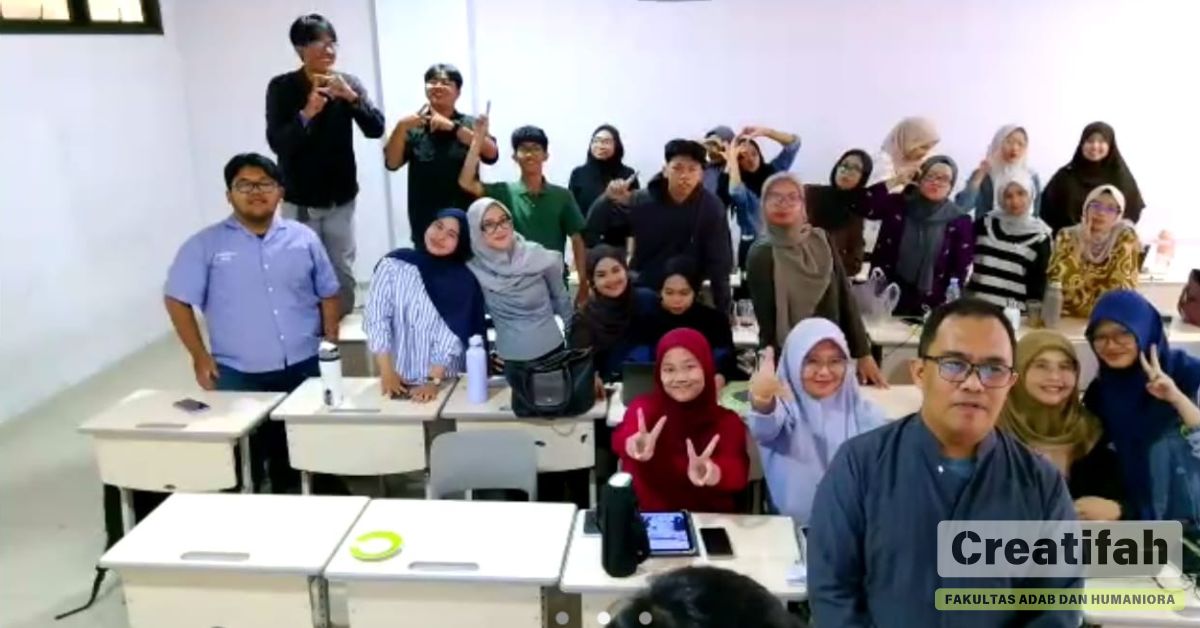
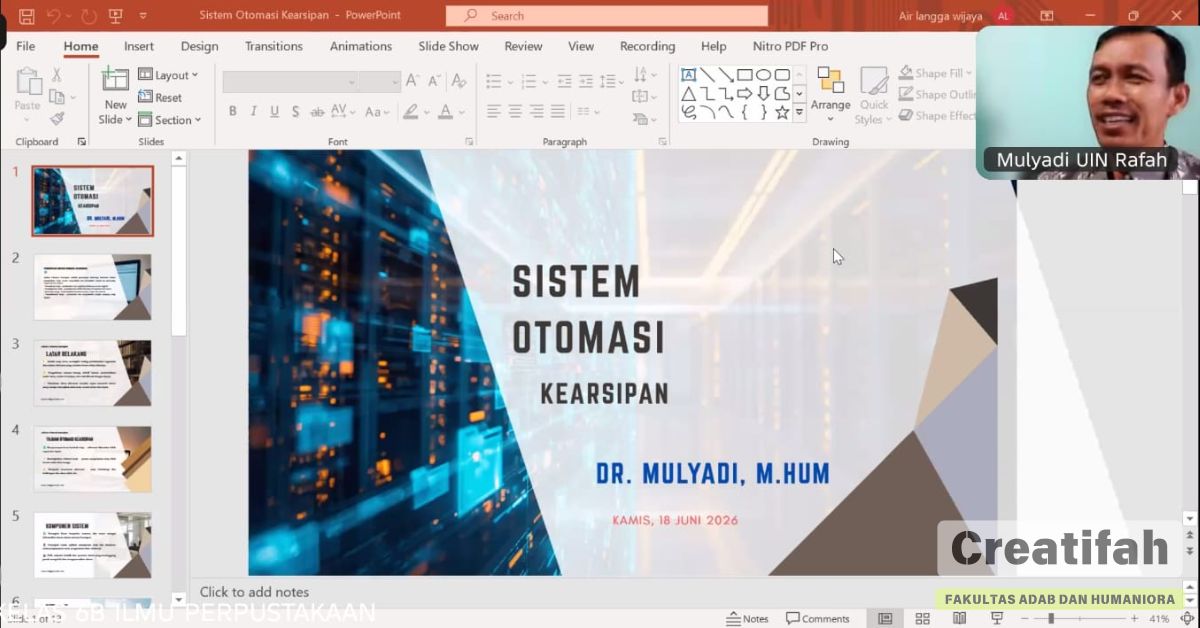
Ciputat, FAH Online News – The Library Science Study Program, Faculty of Adab and Humanities, UIN Syarif Hidayatullah Jakarta, held a guest lecturer session for the course Archival Automation Systems on Thursday (18/06/2026) in an online format. The virtual event, which began at 13:51 WIB, featured Dr. Mulyadi, M.Hum., lecturer from the Library Science Study Program, UIN Raden Fatah Palembang, as the speaker. The lecture was attended by sixth-semester Library Science students and also by Muhammad Azwar, M.Hum., lecturer of Library Science at FAH UIN Jakarta.
In his presentation, Dr. Mulyadi highlighted issues that commonly arise as organizations continue to grow. The increasing number of institutional activities results in more letters, reports, policy documents, and administrative records. When all of these archives are still managed manually, the retrieval process becomes slow, recording is prone to errors, and document availability becomes uncertain when needed.
This issue shows that archives are directly related to the continuity of an organization’s operations. The information contained within them serves as the basis for decision-making, evidence of activities, and a source of organizational accountability. Poor archive management can hinder services and weaken administrative order.
Dr. Mulyadi then explained archival automation as an effort to develop more structured document management through information technology. Such systems accelerate archive retrieval, reduce repetitive tasks, and ensure that information remains available and secure. Its implementation requires a harmonious integration of hardware, archival management applications, databases, and personnel who understand archival procedures.
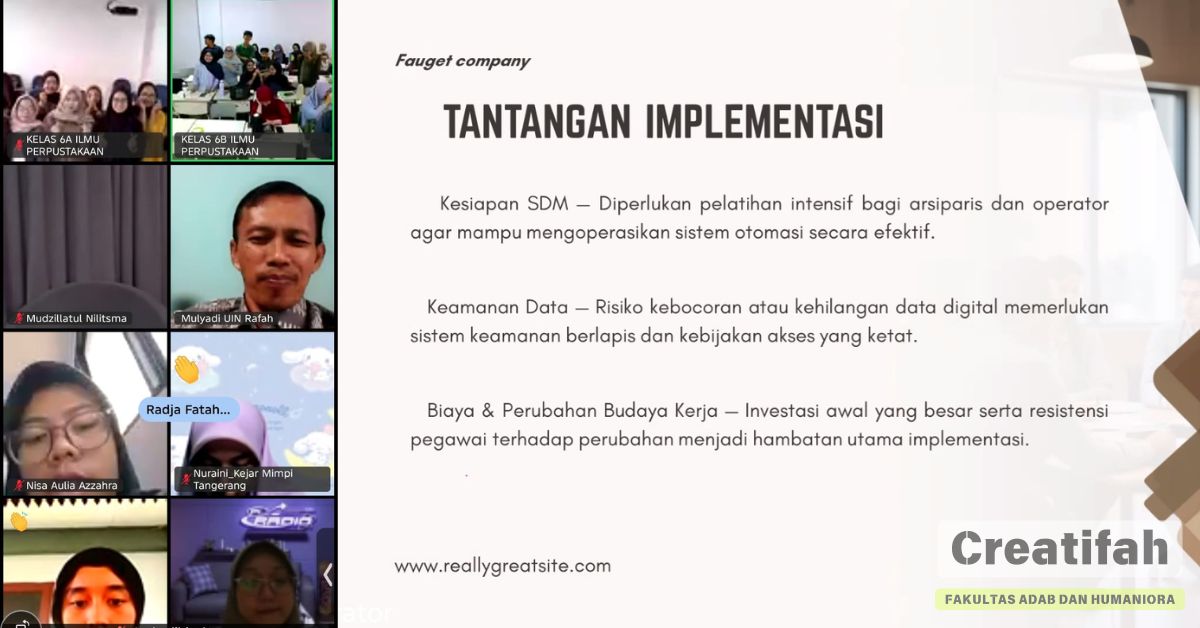
Archival automation can be applied in government institutions, universities, companies, and other organizations. This system helps improve service speed, strengthen accountability, and reduce the risk of document loss. However, its success still depends on human resource readiness, data security, initial funding, and the organization’s ability to adapt its work culture.
The lecture concluded with a discussion and question-and-answer session. Students had the opportunity to explore digitalization practices, electronic records security, and institutional readiness in implementing automation systems. This activity is expected to broaden students’ understanding of digital information management and strengthen their preparedness for the evolving demands of the archival profession.
Author: Andika Pratama
Documentation: