Focus Group Discussion: “The Development of UIN Jakarta Post-Transformation”
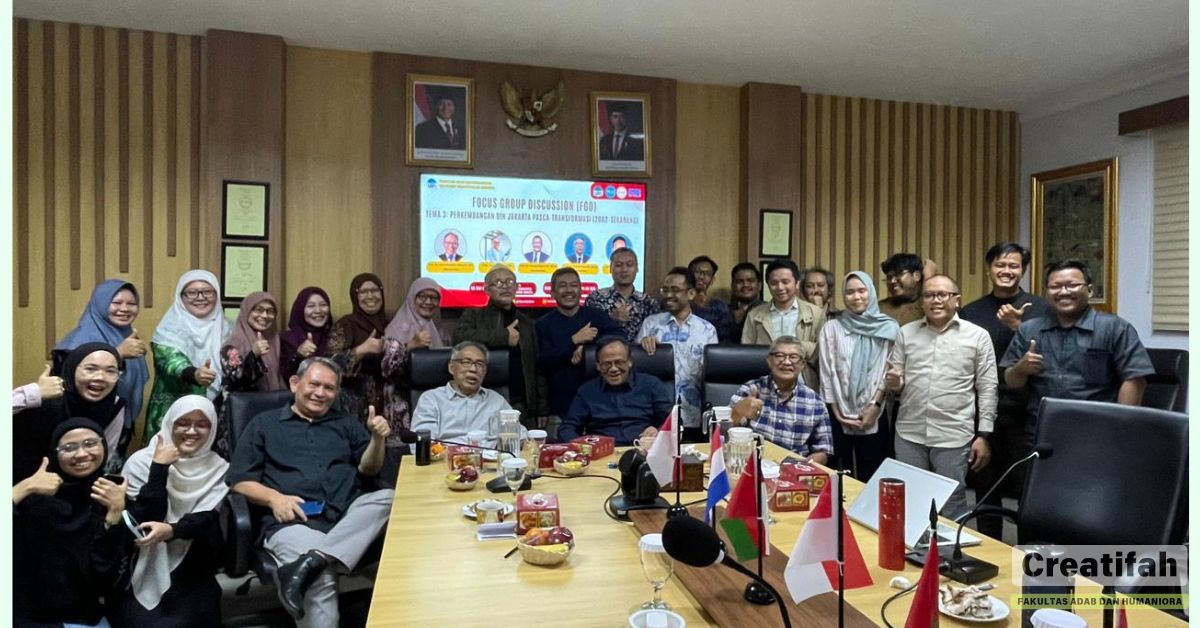
South Tangerang, FAH Online News — Behind the label awarded by QS WUR in the category of Theology, Divinity, and Religious Studies to UIN Jakarta, there lies the hard work and struggle of generations of academics and intellectuals born in Ciputat. Therefore, the Faculty of Adab and Humanities (FAH) of UIN Jakarta held the third session of its Focus Group Discussion (FGD) themed “The Development of UIN Jakarta Post-Transformation” in the Main Meeting Room on Friday (08/05/2026) to revisit the metamorphosis of UIN from ADIA through the integration of knowledge.
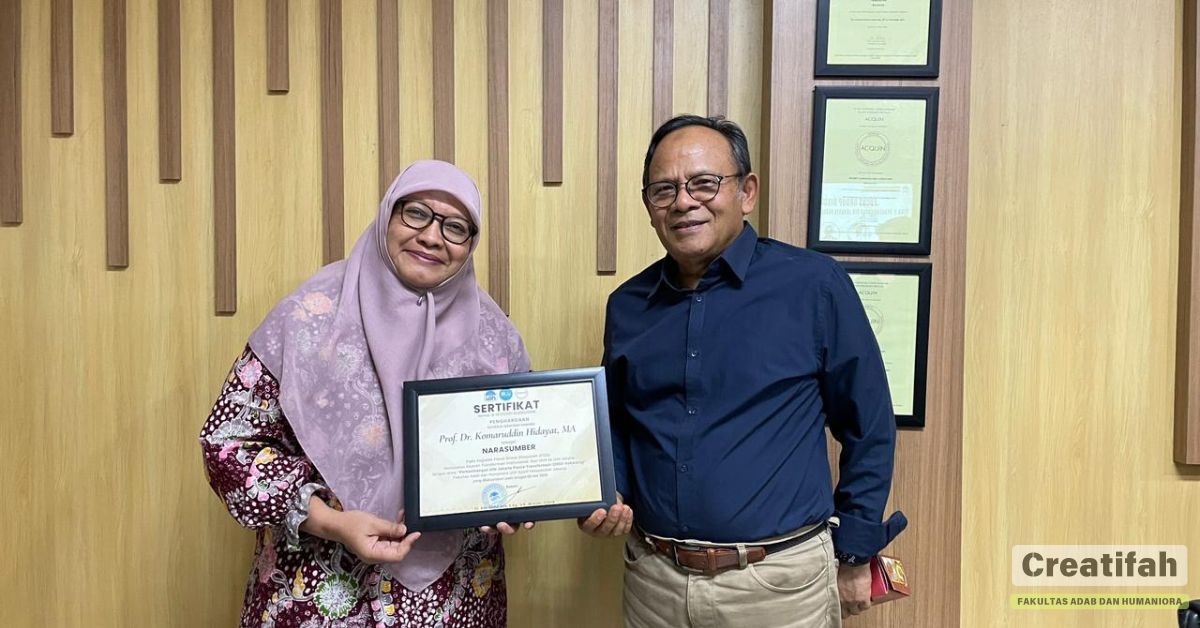
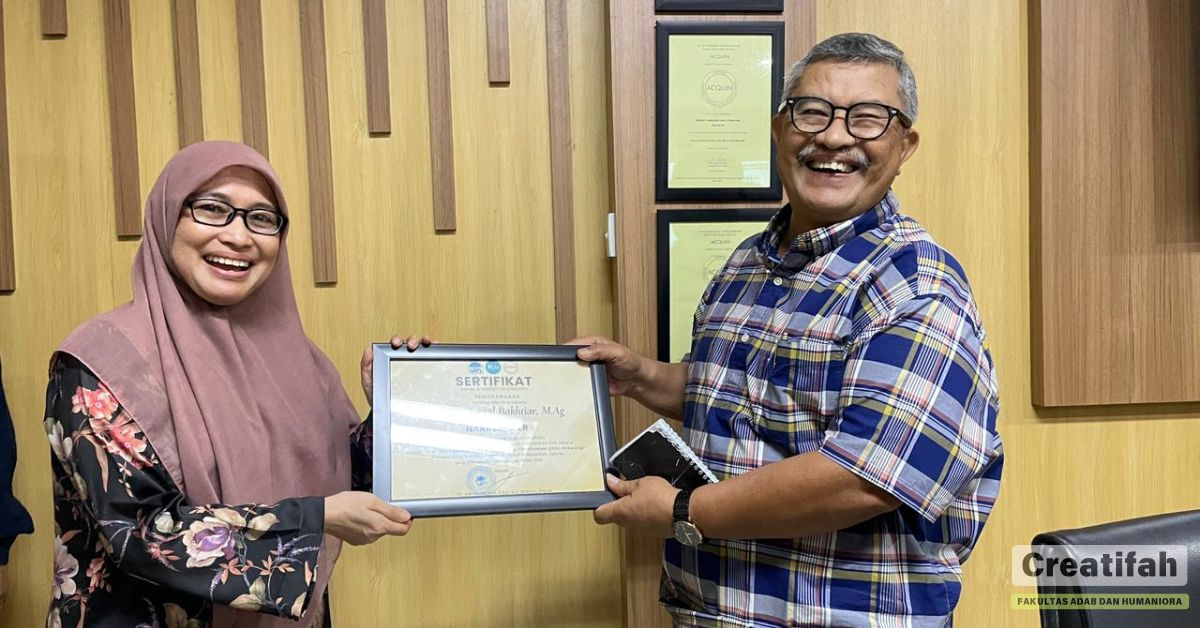
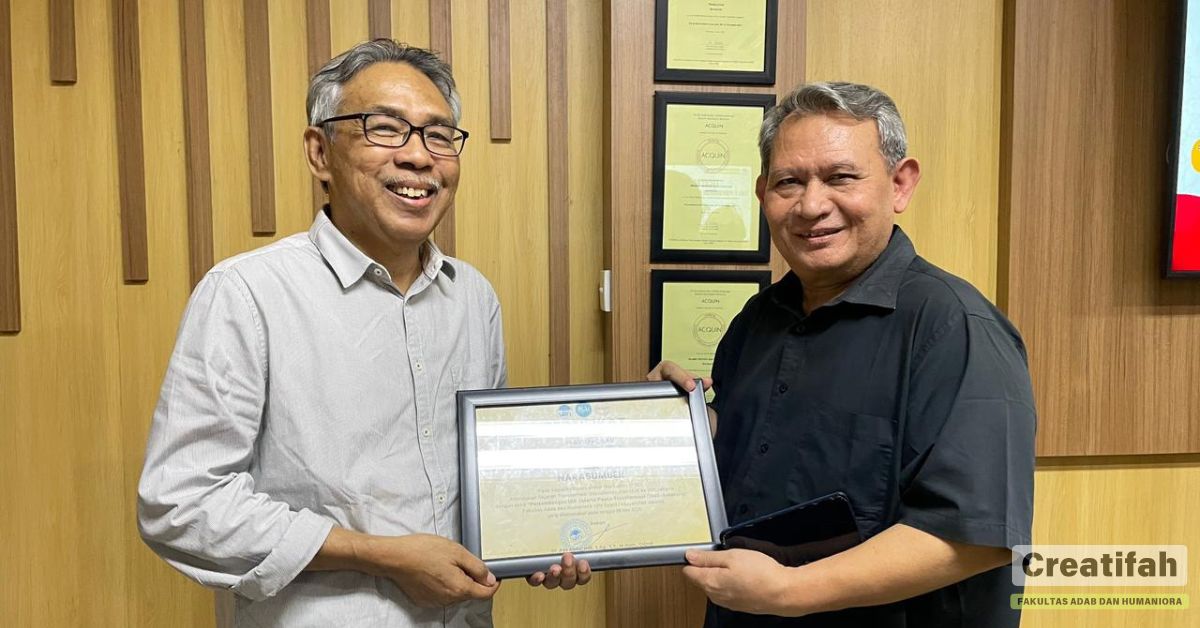
The event featured four main speakers: former Rector of UIN Syarif Hidayatullah Jakarta for the 2006–2010 and 2010–2015 periods, Prof. Dr. Komaruddin Hidayat, M.A.; Professor of UIN Jakarta, Prof. Hamid Nasuki, M.Ag.; Rector of the Indonesian International Islamic University (UIII), Prof. Jamhari, M.A., Ph.D.; and representative from UIII, Prof. Amsal Bakhtiar, M.Ag.
Prof. Dr. Komaruddin Hidayat, M.A., explained that developed countries supporting higher education are driven by the determination of both past and present generations to confront threats from neighboring countries in pursuit of economic and military dominance.
“If we talk about Indonesia, we do not have the same spirit as Iran, China, and Russia, which strive to become superpowers in their respective territories. Therefore, I believe Indonesia needs an education system rooted in society, one of which is religious education,” he explained.
In addition, Prof. Komar emphasized the importance of revisiting the history of Muslim society in Indonesia. According to him, Islam entered Indonesia through trade routes, among communities that were already familiar with rituals and beliefs. This means that the Indonesian ethos of knowledge is based more on the desire to build good relations with others rather than competition through rivalry.
“Alhamdulillah, UIN Jakarta is currently striving to compete on the global stage by becoming a center of Islamic scholarship in Asia. It can be said that UIN Jakarta is not among mediocre campuses in Indonesia, proven by the success of its internationalization targets,” he added.
In line with this, Prof. Amsal explained that to achieve such goals, UIN Jakarta needs to empower its students and alumni through student exchange programs and scholarships.
“This can begin by providing scholarship programs, one of which is the BAZNAS scholarship from the Ministry of Religious Affairs. If we want another example, we can look at UIII as a benchmark. If necessary, we should recruit the best lecturers from ITB, UGM, and even abroad to produce excellent students here,” he emphasized.
Meanwhile, Prof. Hamid Nasuki, M.Ag., explained the bureaucratic obstacles that hinder the development of an Islamic-based academic environment. According to him, this has become a collective issue that must be resolved together by intellectuals and the government.
“From the ADIA, STAIN, and IAIN eras until becoming UIN, we were able to expand the wings of our scholarly tradition without losing the essence of our intellectual identity. Unfortunately, today PTKIN institutions are forced to master general knowledge models through curriculum standards that disadvantage the outcomes of Islamic campuses,” he explained.
Finally, Prof. Amsal Bakhtiar, M.Ag., reminded UIN Jakarta, including FAH, to continuously maintain its scholarly image and the identity of its study programs in order to remain relevant to the foundations of the Ciputat school of thought.
“If we can preserve the identity of UIN since its establishment, then FAH will become the turning point and foundation of Islamic educational studies,” he concluded.
It is known that FAH UIN Jakarta currently offers four internationally accredited study programs by ACQUIN in the fields of Islamic Civilization History and Arabic Language and Literature at the Master’s (S2) and Doctoral (S3) levels.
Writers: Arifin Ilham / Kasih Nur / Deny
Documentation: