Focus Group Discussion on Writing the History Book of UIN Jakarta: Integration of Knowledge (Discourse and Governance)
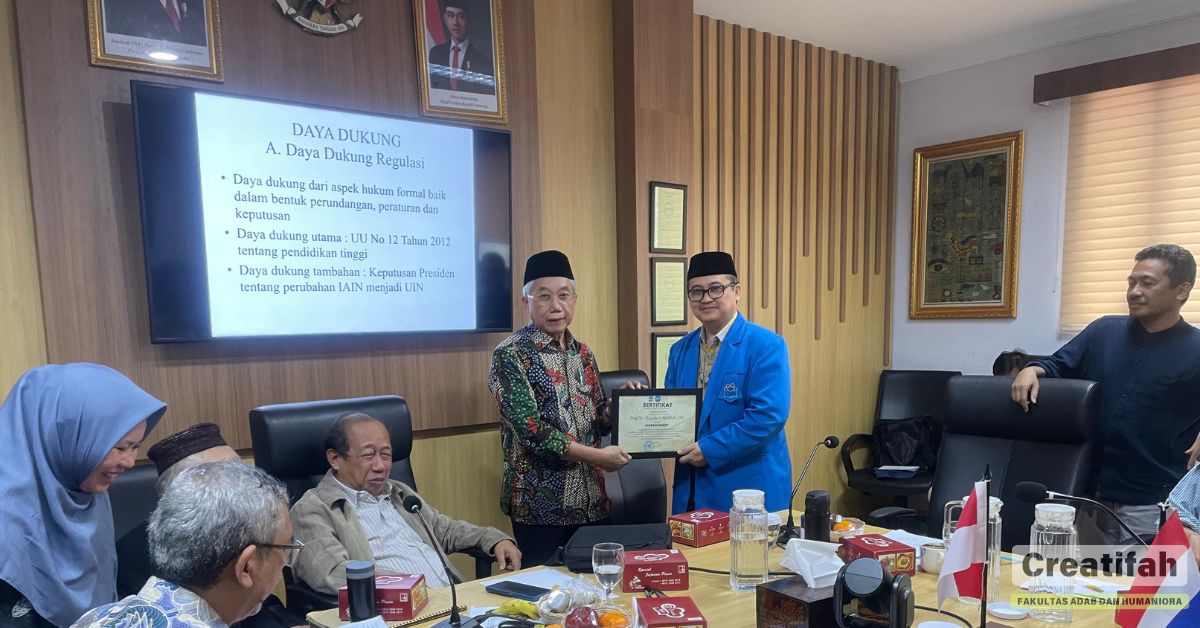
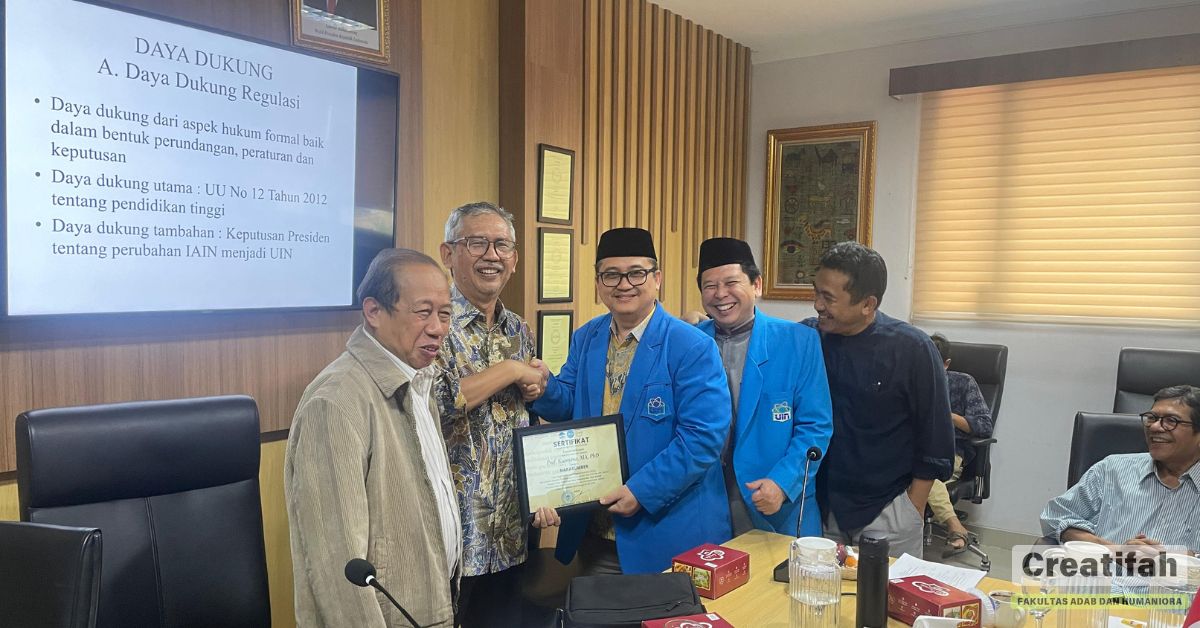
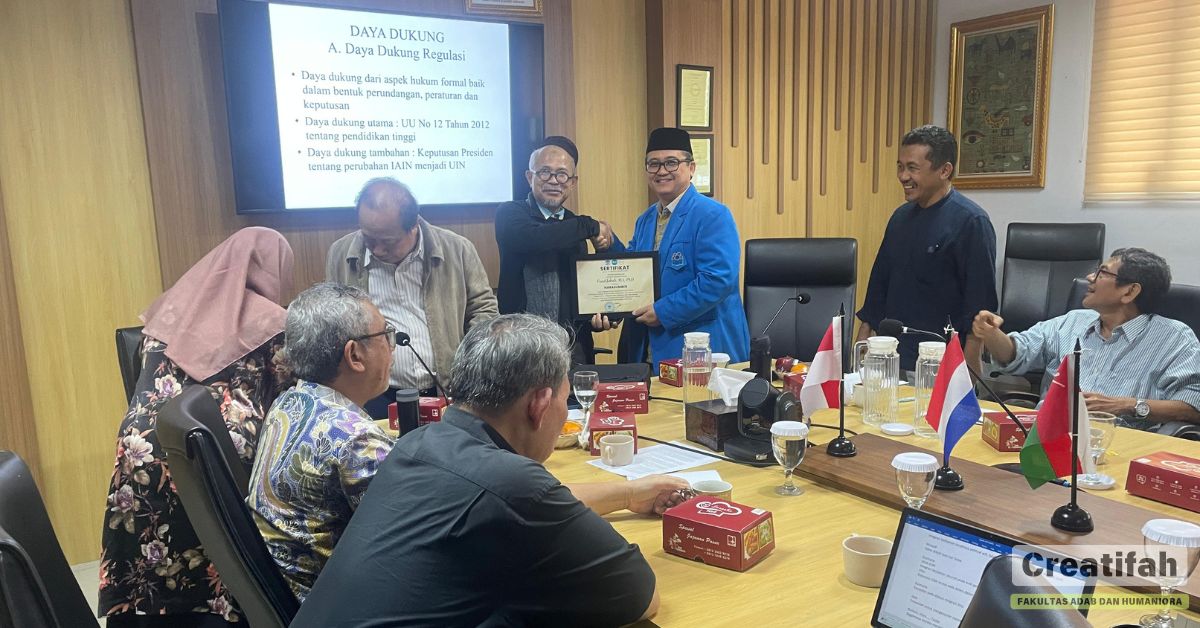
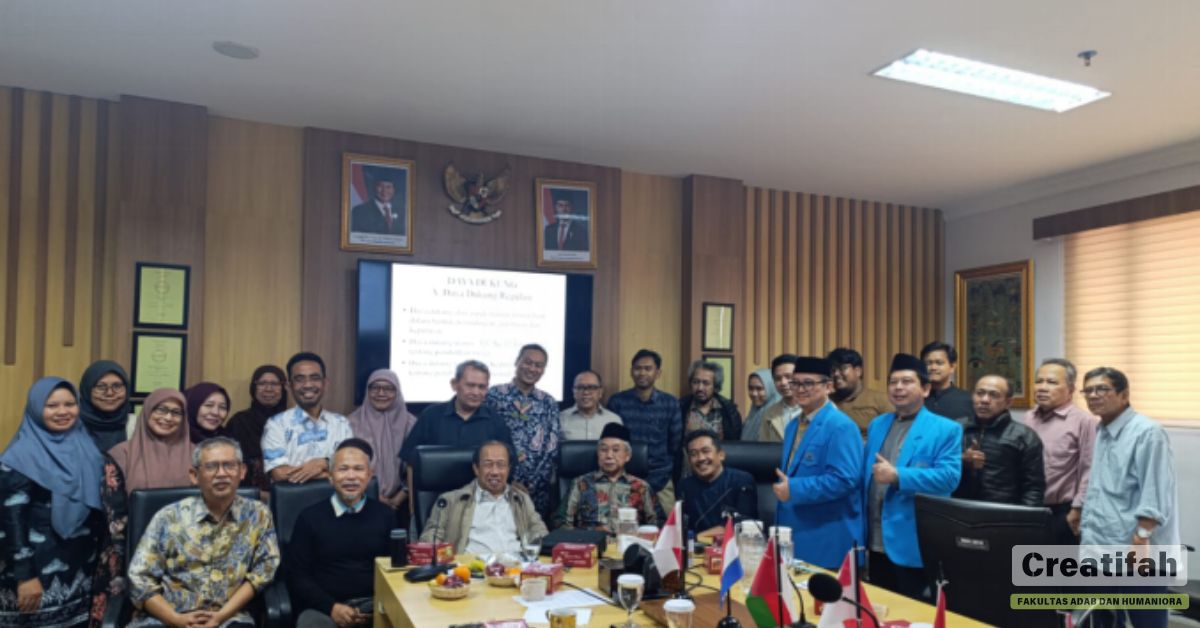
South Tangerang, FAH Online News — The Master’s Program of Islamic Cultural History held a Focus Group Discussion (FGD) entitled Integration of Knowledge (Discourse and Governance) as a continuation of the first phase. Held on Friday (08/05/2026) in the Main Meeting Room of the Faculty of Adab and Humanities, UIN Jakarta, the forum invited Prof. Dr. Masykuri Abdillah, M.A., Prof. Dr. Mulyadhi Kartanegara, Prof. Kusmana, M.A., Ph.D., Fuad Jabali, M.A., Ph.D., and Dr. Ade Abdul Hak, S.Ag., S.S., M.Hum., CIQnR as distinguished speakers and guests.
In this continuation session, the discussion focused more specifically on the Integration of Knowledge: Discourse and Governance at UIN Jakarta. As explained by Prof. Dr. Mulyadhi Kartanegara, an Islamic scholar and philosopher, “There are several reasons why the integration of knowledge is necessary. First, the scientific status of religious and rational sciences; second, the validity of sources; third, the problem of the object of knowledge; fourth, the problem of the classification of knowledge; fifth, the problem of scientific methods; and sixth, the integration of human experience. These six issues form the foundation for integrating knowledge at UIN Jakarta. Then, what should be integrated? There are six aspects that need integration: first, the integration of religious and rational sciences; second, the integration of the object of knowledge; third, the integration of scientific disciplines; fourth, the integration of sources of knowledge; fifth, the integration of scientific methods; and sixth, the integration of human experience. These are the matters that UIN Jakarta must continue to study and improve,” he stated.
In addition, Prof. Dr. Masykuri Abdillah, Professor of Islamic Law, explained that “the integration of Islamic religious sciences with social sciences, natural sciences, and humanities has actually existed since the early development of those disciplines. However, when the Islamic world experienced decline, a dichotomy emerged between religious sciences and natural/social sciences. This condition encouraged many Muslim scholars to advance and modernize Islamic society. Institutionally, these efforts were addressed through the development and establishment of Islamic universities that not only teach religious sciences but also modern sciences,” he emphasized.
Meanwhile, Fuad Jabali, M.A., Ph.D., lecturer at the Faculty of Adab and Humanities, offered a slightly different perspective. “Knowledge needs to be objectified toward a particular subject so that discussions can remain focused and the core understanding does not become fragmented. Therefore, when we center knowledge on Islamic teachings, other sciences can also be accommodated within it,” he explained.
In line with the previous discussion, Prof. Kusmana, M.A., Ph.D., Professor of Islamic Studies and Social Sciences, stated that “there are several foundations for the integration of knowledge, namely restoring the transformative purpose of PTKI into UIN, which is to demonstrate the ontological equality between religious sciences and other sciences. The integration of knowledge is not an attempt to Islamize knowledge, but rather a reconstruction of ethical and methodological frameworks. In the context of UIN, the integration of knowledge is directed toward integrating Islamic epistemological and axiological perspectives into existing general knowledge,” he said.
Therefore, the integration of knowledge at UIN Jakarta is considered necessary to eliminate the dichotomous mindset between religious and general sciences, as well as to focus scientific discussions on a unified object under the broader framework of Islam.
Writer: Ahmad Daffa Rasyidi / Kasih Nur / Deny
Documentation: