FAH UIN Jakarta National Seminar Discusses Hermeneutics and Literary Interpretation: Strengthening Critical Humanities Studies
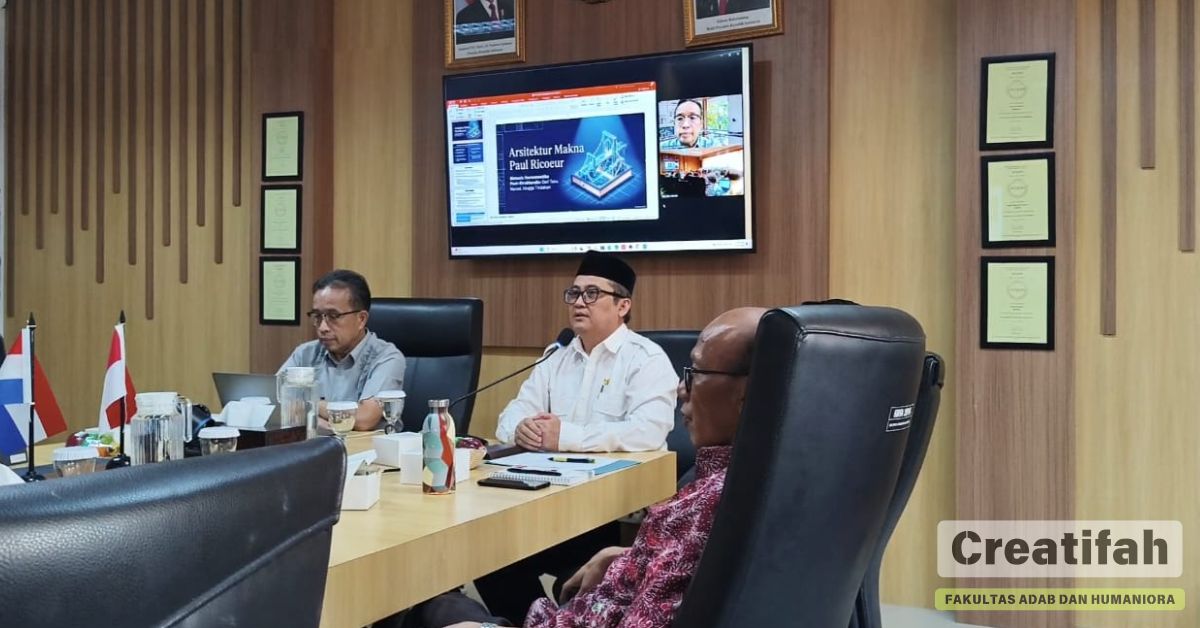
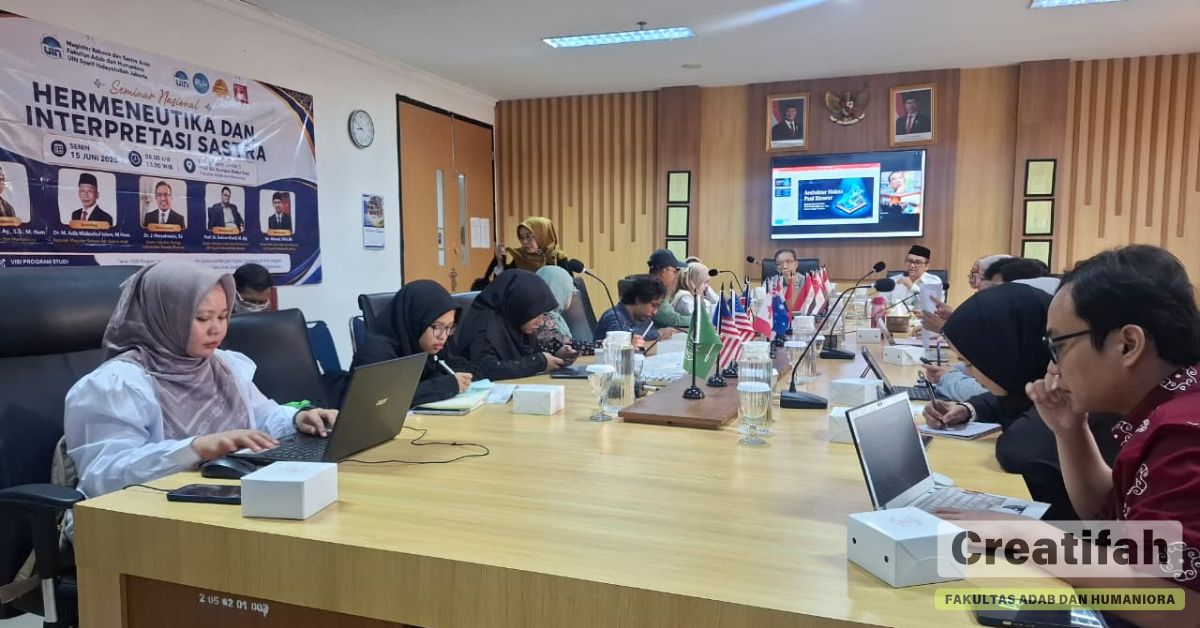
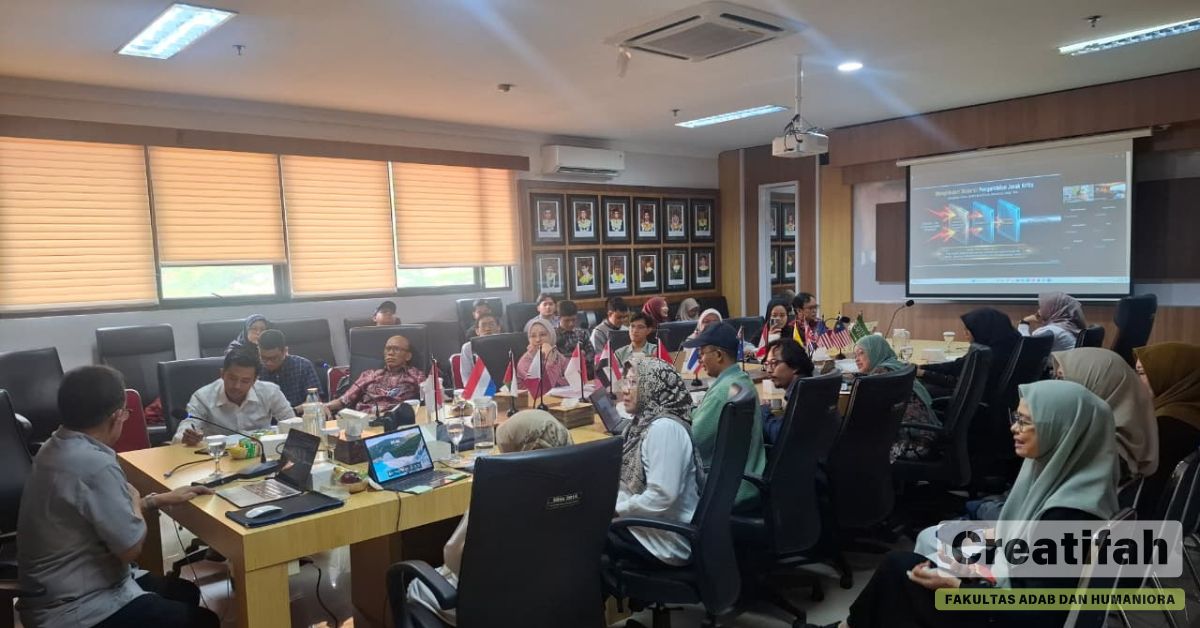
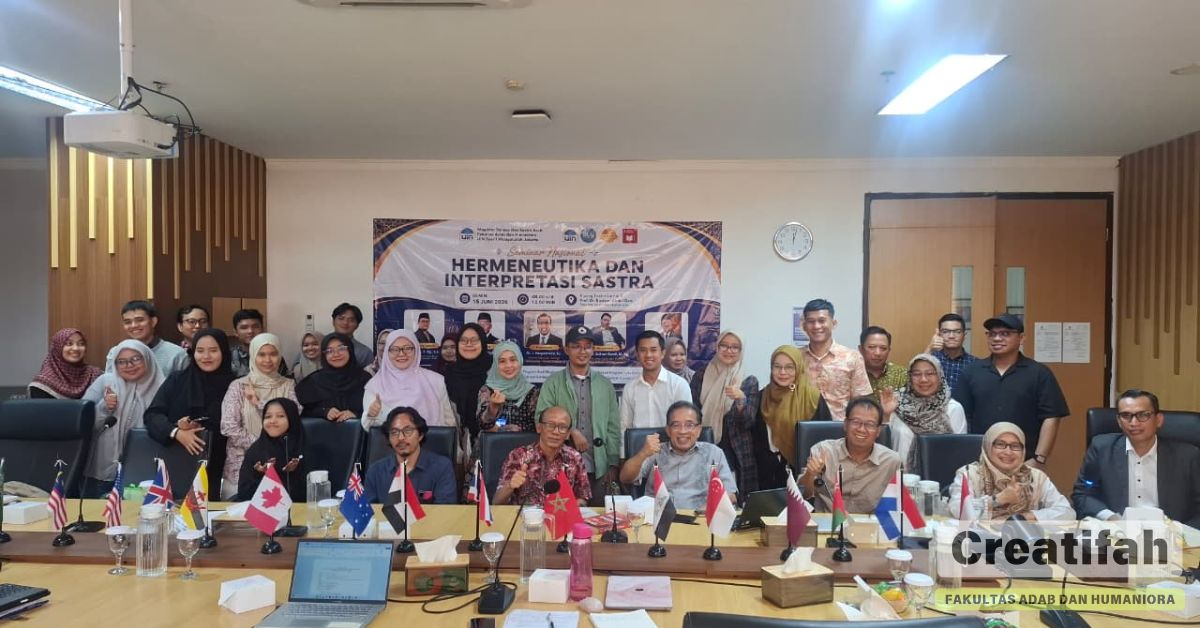
South Tangerang, FAH Online News – The Master’s Program in Arabic Language and Literature, Faculty of Adab and Humanities (FAH), UIN Syarif Hidayatullah Jakarta, organized a National Seminar titled “Hermeneutics and Literary Interpretation” on Monday (15/6/2026). The event was held at 08.00 a.m. WIB in the Main Meeting Room, 2nd Floor of the FAH Building, and served as one of the important academic forums in strengthening the tradition of critical humanities scholarship within the postgraduate environment.
The seminar was attended by the Dean of FAH UIN Jakarta, Dr. Ade Abdul Hak, M.Hum., the Head of the Master’s Program in Arabic Language and Literature, Dr. Adib Misbahul Islam, M.Hum., faculty members, as well as master’s and doctoral students. The academic event was moderated by Dr. Ahmad Hifni, M.A., featuring two main speakers, namely Dr. Haryatmoko, S.J. from Sanata Dharma University and Prof. Dr. Sukron Kamil from UIN Syarif Hidayatullah Jakarta.
Hermeneutics as a Critical Approach in Textual Studies
In his opening remarks, the faculty emphasized that this seminar responded to the growing interest among students in using hermeneutical approaches in academic research, particularly in literary studies, religious texts, and cultural analysis. Hermeneutics is viewed not only as a method of interpretation but also as a critical way of thinking in reading social realities embedded within texts.
In the first session, Dr. Haryatmoko, S.J. presented an in-depth explanation of critical hermeneutics developed by Paul Ricoeur and its relevance to post-structuralist approaches. He emphasized that texts never exist in a vacuum but are always situated within networks of power relations, history, and social structures that shape them.
According to him, textual reading must be conducted critically through narrative analysis in order to uncover hidden ideologies within texts.
“Every text carries traces of power and interests. Therefore, reading a text also means reading the surrounding social structure,” he stated.
He also illustrated how critical hermeneutics can be used to reveal discourses of feudalism and patriarchy that are often not explicitly visible in literary and social texts.
Integration of Hermeneutics with Islamic Intellectual Tradition
The next session was delivered by Prof. Dr. Sukron Kamil, who connected the concept of hermeneutics with the Islamic intellectual tradition. He explained that within Islamic scholarship, principles of textual interpretation have long been recognized through disciplines such as usul al-fiqh and tafsir isyari.
He emphasized that textual reading in the Islamic tradition does not stop at the literal meaning but also opens space for deeper and contextual meanings.
“In reading texts, we do not only seek the first meaning, but also the second and even third meanings hidden within them,” he explained.
Furthermore, Prof. Sukron Kamil cited the philosophical thought of Ibn Arabi, who emphasized the importance of renewing meaning in the interpretive process.
“If we interpret, what we seek is tajdīd al-ma‘nā wa tajdīd al-khalq, namely renewing meaning and recreating meaning,” he stated.
This thought demonstrates a convergence between modern hermeneutics and classical Islamic intellectual tradition, both of which emphasize the dynamic nature of meaning in textual interpretation.
Relevance of Hermeneutics for Postgraduate Research
The interactive discussion provided a reflective space for seminar participants, particularly postgraduate and doctoral students, in developing their research approaches. Hermeneutics is considered a relevant method for bridging the gap between historical texts and contemporary contexts.
Participants also noted that this approach enables researchers not only to be descriptive but also critical in analyzing social, cultural, and religious phenomena.
Thus, hermeneutics functions not only as a tool of textual analysis but also as an epistemological approach to understanding broader realities.
Strengthening Critical Academic Tradition
Through this national seminar, FAH UIN Syarif Hidayatullah Jakarta reaffirmed its commitment to strengthening a critical, reflective, and contextual tradition of humanities scholarship. This activity is expected to produce researchers who are not only able to read texts literally but also understand the complexity of meanings embedded within them.
In the future, the faculty hopes that similar activities can continue to be developed as spaces for interdisciplinary academic dialogue, particularly in connecting Islamic intellectual traditions with contemporary theories in the humanities.
Authors: Andika Pratama / Kasih Nur / Deny
Documentation: