
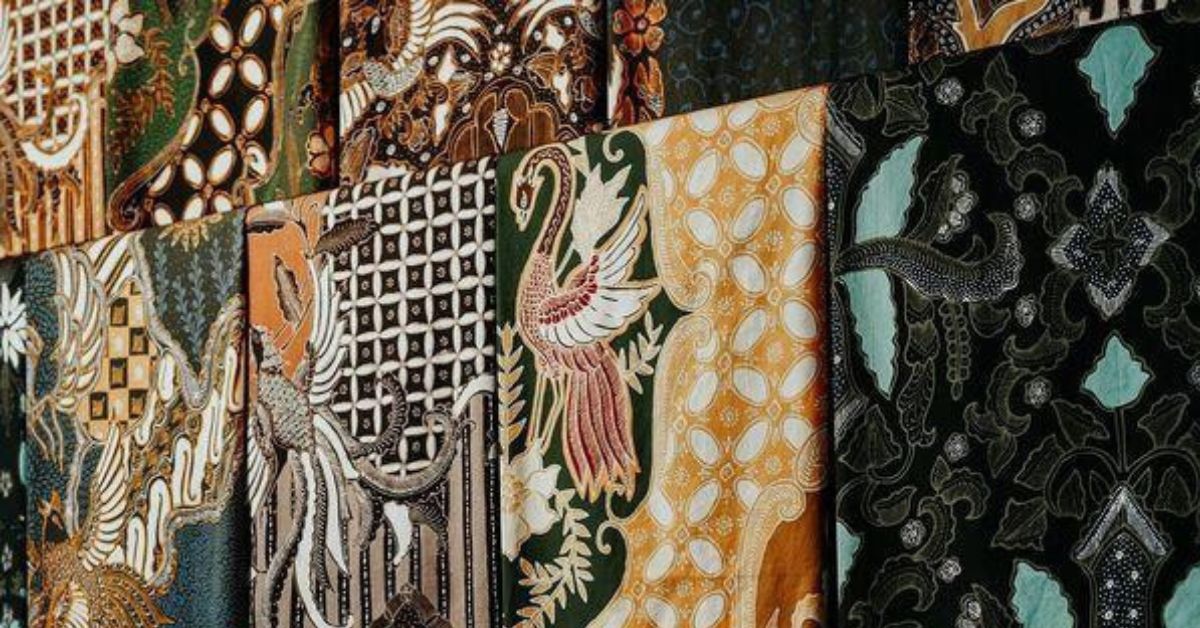
Batik: From Local Wisdom to the Intangible Cultural Heritage of Humanity
Batik is a traditional textile that has long been deeply embedded in the lives of Javanese people, making it a form of local wisdom that has endured through the ages. In today’s world, amid the widespread influence of Western-style fashion, batik remains highly favored by its admirers. It is therefore unsurprising that batik continues to hold a special place in the hearts of Indonesian people.
Its diverse, beautiful, and captivating motifs, combined with a largely manual production process that demands extensive creativity from its artisans, give batik an elegant and refined appearance to anyone who wears it. These qualities have allowed batik to maintain its existence despite changing times and the continuous emergence of Western fashion trends. Nevertheless, many Indonesians still do not fully understand how batik has managed to remain relevant and continuously introduce new creative designs that preserve its popularity among the Indonesian public.
Linguistically, the word batik is often associated with two Javanese words: amba, meaning “to write,” and nitik, meaning “to make dots.” The combination of these words refers to the process of writing or drawing with wax. In his book entitled Batik Klasik, Hamzuri defines batik as a method of decorating cloth by covering certain parts of it with a resist material.
In general, batik is created by drawing patterns on cloth using a canting, a traditional tool used to apply hot wax. Because the tip of the canting is very small, the artisan appears to be making a series of dots on the fabric. Although batik motifs have developed into many different forms today, historically, the earliest motifs generally consisted of dots and plant-inspired patterns.
The tradition of batik-making was initially practiced only within royal palace environments, particularly among members of the aristocracy. This meant that not everyone was permitted to wear batik, especially certain patterns that were designated as prohibited motifs for the general public.
However, because many royal servants lived outside the palace grounds, the batik-making tradition gradually spread beyond the palace. Local communities began learning batik techniques from palace servants who lived among them. This development later became the foundation for the transformation of batik from a product intended for personal use into a commodity produced for industrial purposes.
Industrial activities have existed for centuries throughout human civilization. Since the Industrial Revolution began in England at the end of the eighteenth century and later developed into the current era of Industry 4.0, numerous changes have taken place (Wrigley, 2018). Many industries are distributed across various regions of Indonesia; however, this discussion focuses on the Special Region of Yogyakarta.
Indonesia’s domestic batik industry generally consists of small and medium-sized enterprises. These businesses commonly use low- to medium-level production technology, demonstrate relatively limited entrepreneurial orientation, frequently imitate existing products, and often obtain design references from external sources (Poon, 2017).
The number of Yogyakarta residents involved in the industrial sector reached 163,397 people, or approximately 10.6 percent of the population (Sitsen, 1937). When Indonesia was still under the rule of the Dutch East Indies, the Dutch colonial administration also made serious efforts to manage and develop the batik industry on the island of Java.
In 1922, the Textile Inrichting en Batik Proefstation was established in Bandung. This institution was founded to support weaving activities on the island of Java, particularly batik production in Yogyakarta. This period marked the beginning of batik’s transition from a personal necessity for palace aristocrats into an industrial commodity and a source of livelihood for the wider community.
The development of batik was supported not only by the growth of batik industries in various regions of Indonesia but also by the support provided by several presidents of the Republic of Indonesia. During President Soekarno’s administration, national identity was strengthened through an appreciation of art created by Indonesian artisans.
During President Soeharto’s administration, batik was introduced to international leaders at the 1994 Asia-Pacific Economic Cooperation Conference held at the Bogor Palace. President Soeharto recognized the significant opportunity to introduce the art of batik-making to the international community. This occasion became an important milestone in the growing global recognition of batik.
The culmination of these efforts occurred during the administration of Susilo Bambang Yudhoyono, Indonesia’s sixth president, when batik was proposed as part of Indonesia’s cultural heritage. On 2 October 2009, batik was internationally recognized by UNESCO and inscribed on the Representative List of the Intangible Cultural Heritage of Humanity. The inclusion of batik on UNESCO’s list places a responsibility on Indonesian society to protect and preserve the tradition of batik-making.
This recognition has encouraged a growing sense of love and commitment among Indonesians to preserve batik. Preservation efforts have been carried out by the government, students, university students, and members of civil society.
One example can be found at the Faculty of Adab and Humanities of Syarif Hidayatullah State Islamic University Jakarta. Through one of its institutional programs, students are required to wear batik every Tuesday. This policy is intended to foster love, pride, and appreciation for Indonesia’s traditional arts and culture.
The Indonesian government has also designated the date on which UNESCO recognized batik as part of the Intangible Cultural Heritage of Humanity as National Batik Day. Batik has therefore successfully transformed from a form of local community wisdom into an internationally recognized intangible cultural heritage of humanity.
Author: Ahmad Daffa Rasyidi
References
Abdullah, F., & Wardoyo, B. T. (2020). Jejak-Jejak Dinamika Industri Batik Yogyakarta 1920–1930. Dinamika Kerajinan dan Batik: Majalah Ilmiah, 37(1), 15–24. https://doi.org/10.22322/dkb.v36i1.4149
Trixie, A. A. (2020). Filosofi Motif Batik Sebagai Identitas Bangsa Indonesia. Folio, 1(1), 1–9.
Widadi, Z. (2019). Pemaknaan Batik Sebagai Warisan Budaya Takbenda. Jurnal PENA, 33(2), 17–27.